

Introducing a Carbon Dioxide Removal Lexicon Guide, grounded in public research
Carbon dioxide removal is steadily moving into broader deployment. Projects are being built; policy frameworks are being developed; and communities are being asked to engage.
But public understanding has not kept pace with the speed of those decisions.
Today, the Carbon Business Council and the Potential Energy Coalition are releasing new polling data and a practical Carbon Dioxide Removal Messaging and Lexicon Guide to help close that gap. The guide draws on large-scale public research in the United States and the United Kingdom to understand how people perceive carbon dioxide removal, what builds trust, and which explanations improve clarity rather than confusion.
As carbon removal scales, how we talk about it starts to matter almost as much as the methods themselves, shaping how clearly it is understood as projects and policies advance.
However, communication is only one part of the broader picture. Clear language is most effective when paired with rigorous monitoring, meaningful community engagement, and responsible project design.
This guide is designed to support accurate, transparent conversations about carbon dioxide removal, grounded in credible science and social accountability.
What the data tells us about public understanding
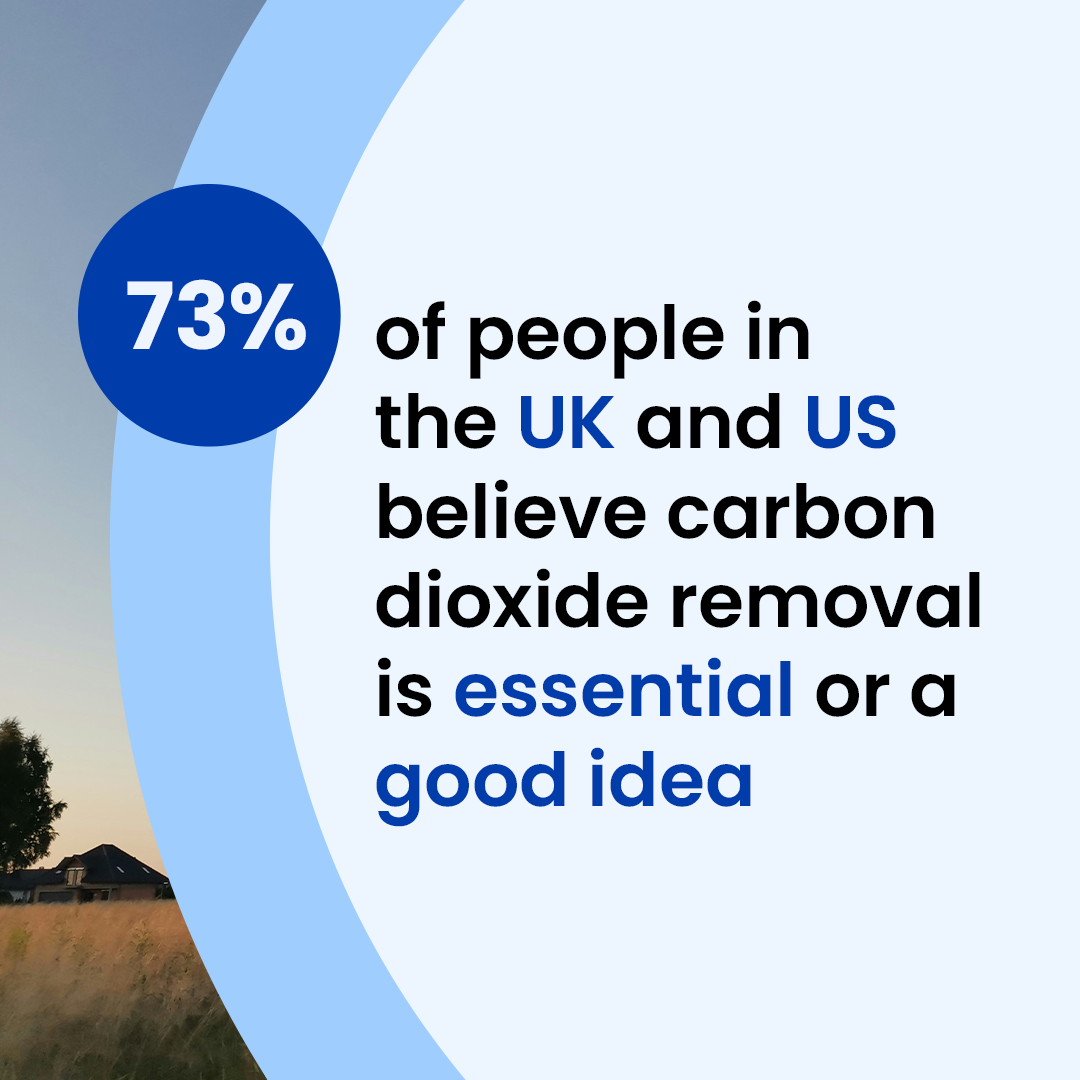
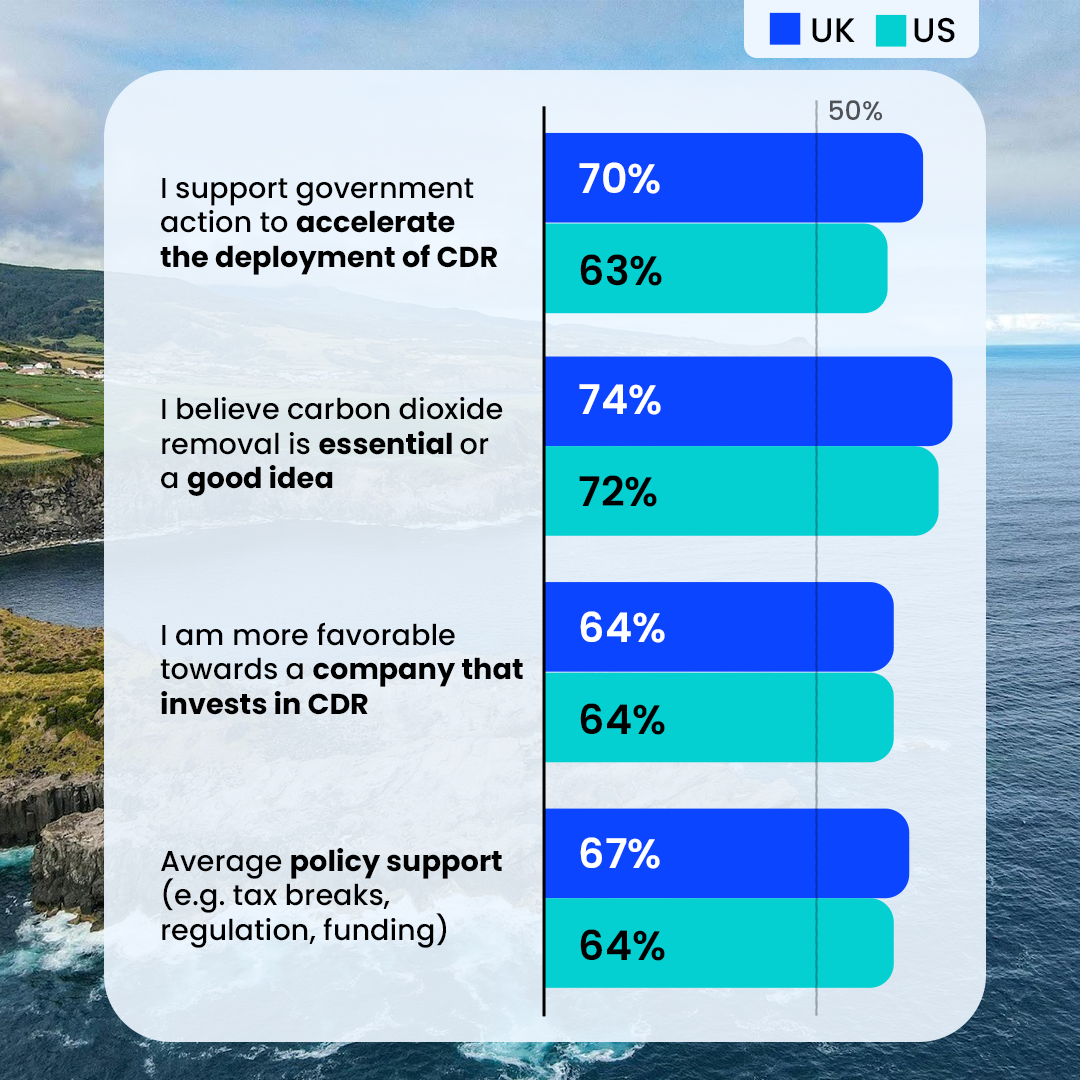
With survey data from more than 5,700 people in the United States and 6,300 people in the United Kingdom, the guide examines baseline awareness, levels of support, and how different explanations of carbon dioxide removal shape understanding and confidence.
Several insights stand out.
Awareness remains limited. About half of adults recognize the term “carbon dioxide removal,” but only one in six say they have heard much about it.
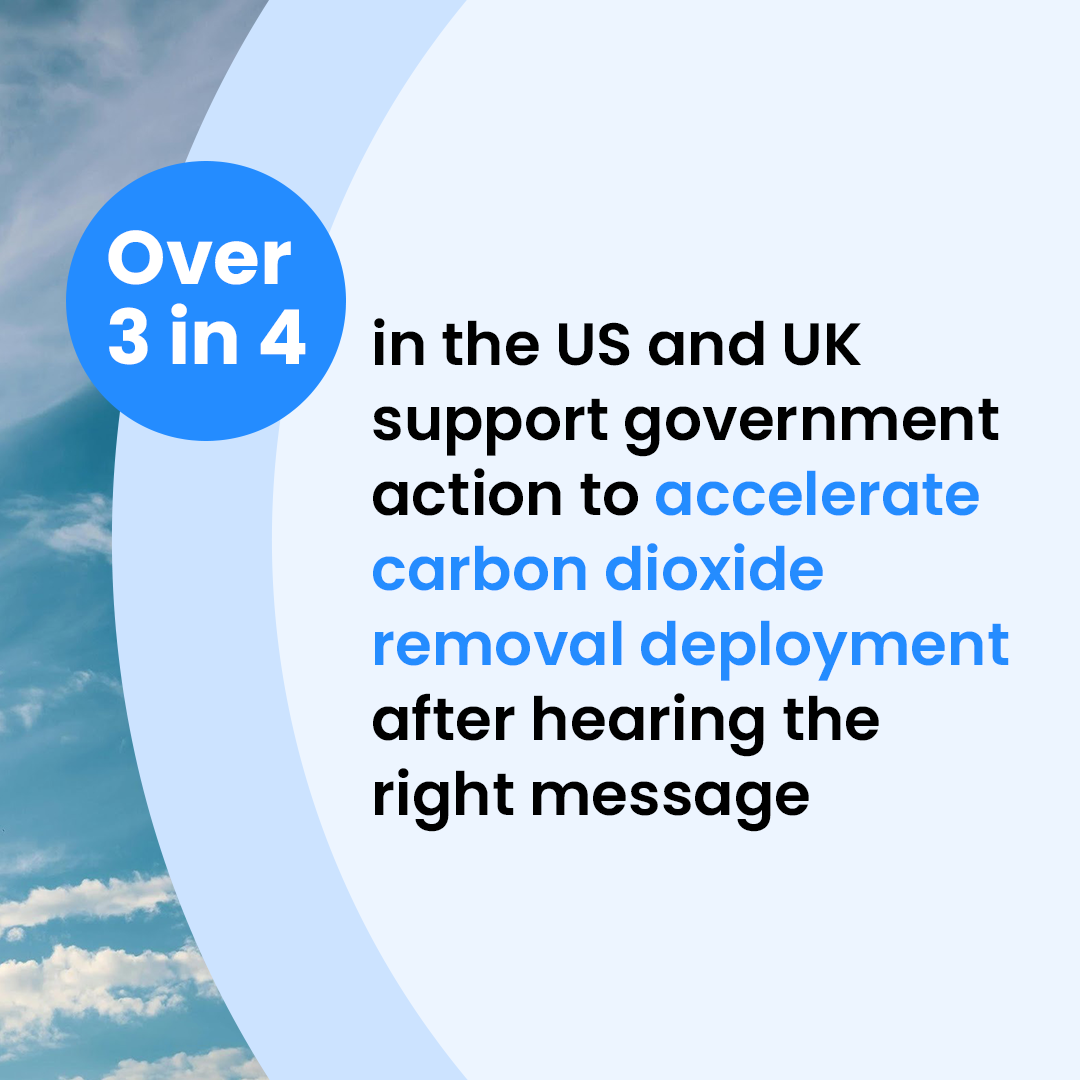
Openness is high. After a brief, clear introduction, roughly two thirds of respondents support government action to accelerate carbon dioxide removal deployment.
How we frame the issue matters. Small changes in language meaningfully affect understanding and support, with the most effective messages increasing support by a further ten percentage points or more.
Trust depends on clarity and credibility. Scientists and carbon removal practitioners are among the most trusted messengers, while governments and corporations are expected to fund the work rather than lead public explanation. The data shows that people are not starting from opposition, but from limited information, making clear, careful communication especially important.
From research to a shared communication guide
These findings directly informed the new Carbon Dioxide Removal Messaging and Lexicon Guide, which is designed to support clear, consistent conversations about carbon dioxide removal across policy discussions, community engagement, and corporate decision-making.
The guide draws on public research to highlight communication principles and language shown to improve understanding, while leaving room for organizations to explain their work accurately and in ways that are appropriate for their specific setting. The guide has undergone multiple rounds of review with scientists, practitioners, and policy experts across the carbon removal field to ensure accuracy, balance, and clarity.
A clear set of communication patterns and learnings emerged from the data.
Name the problem clearly.
People respond best when excess carbon dioxide is clearly identified as the issue, rather than starting with abstract or highly technical framing.
Explanations that begin with the idea that there is too much carbon dioxide in the air after decades of pollution were more effective than leading with climate targets, acronyms, or engineering details. This framing helps audiences understand the purpose of carbon removal before diving into how specific approaches work.
Frame solutions around restoring balance.
Messages are strongest when carbon removal is described as helping restore balance to Earth’s systems, rather than altering or transforming them. This often means explaining how approaches work with natural processes that already cycle carbon, such as the ocean, soils, rocks, and minerals.
Pair environmental outcomes with economic benefits.
A message focused solely on the economy is insufficient. Economic co-benefits resonate more when connected to climate impacts and across all pathways.
Examples of co-benefits that resonated include improving soil health and farm productivity, supporting healthy fisheries and coastal ecosystems, and creating durable, skilled jobs tied to long-term projects.
Ground explanations in familiar Earth systems.
Explanations are clearer when carbon removal approaches are described using familiar systems, such as air, ocean, rocks, and plant life, rather than acronyms or highly technical terminology. Explaining a pathway as removing carbon dioxide from the air with filters, or using rocks and minerals to speed up natural soil processes, helped people understand the concept more quickly and reduced initial concern.
Why this matters
Carbon dioxide removal is increasingly part of climate and economic conversations, policy discussions, and project development. As these efforts move forward, we need shared language that supports understanding and constructive dialogue.
This means meeting people where they are, being transparent about what carbon dioxide removal is and is not, and grounding conversations in shared understanding rather than assumptions. Clear communication does not guarantee agreement, but it does create the conditions for informed discussion, better decision-making, and public trust as the field evolves.
A resource meant to be used
We see this guide as a shared resource for a growing and diverse field. It is meant to be used and adapted as carbon dioxide removal continues to develop.
Our hope is that it supports clearer, more consistent conversations across sectors and geographies, and helps ensure that as carbon removal scales, understanding scales with it.
While this research focused on public audiences in the United States and the United Kingdom, many of the findings, such as the importance of clarity, transparency, and grounding explanations in familiar systems, are relevant across regions. At the same time, we recognize that public priorities, histories, and concerns vary widely, and that effective communication must be adapted to local contexts through engagement with regional experts and communities.
You can explore the full polling results and download the Carbon Dioxide Removal Messaging and Lexicon Guide here.
About the Carbon Business Council
The Carbon Business Council (CO2BC) is a coalition representing more than 100 carbon management companies across all major pathways who are united to build a more prosperous planet. Our coalition accelerates market development across sectors and continents through ecosystem building, policy engagement, and public affairs.
About Potential Energy Coalition
Potential Energy Coalition is a nonprofit marketing firm driving public demand for climate solutions. Leveraging deep analytics and creative storytelling, Potential Energy connects with people on a human level to tip the balance on the solutions that will dramatically accelerate the energy transition. Our campaigns are backed by extensive audience research, yielding data-driven insights that shift the climate narrative to win the fights that matter. Founded in 2018, Potential Energy has a track record of transformative campaigns that capture audiences and mobilize support for climate solutions. Learn more at potentialenergycoalition.org.
Media Contact
Sasha Chebil, Director of Communications, Carbon Business Council sasha.chebil@carbonbusinesscouncil.org
